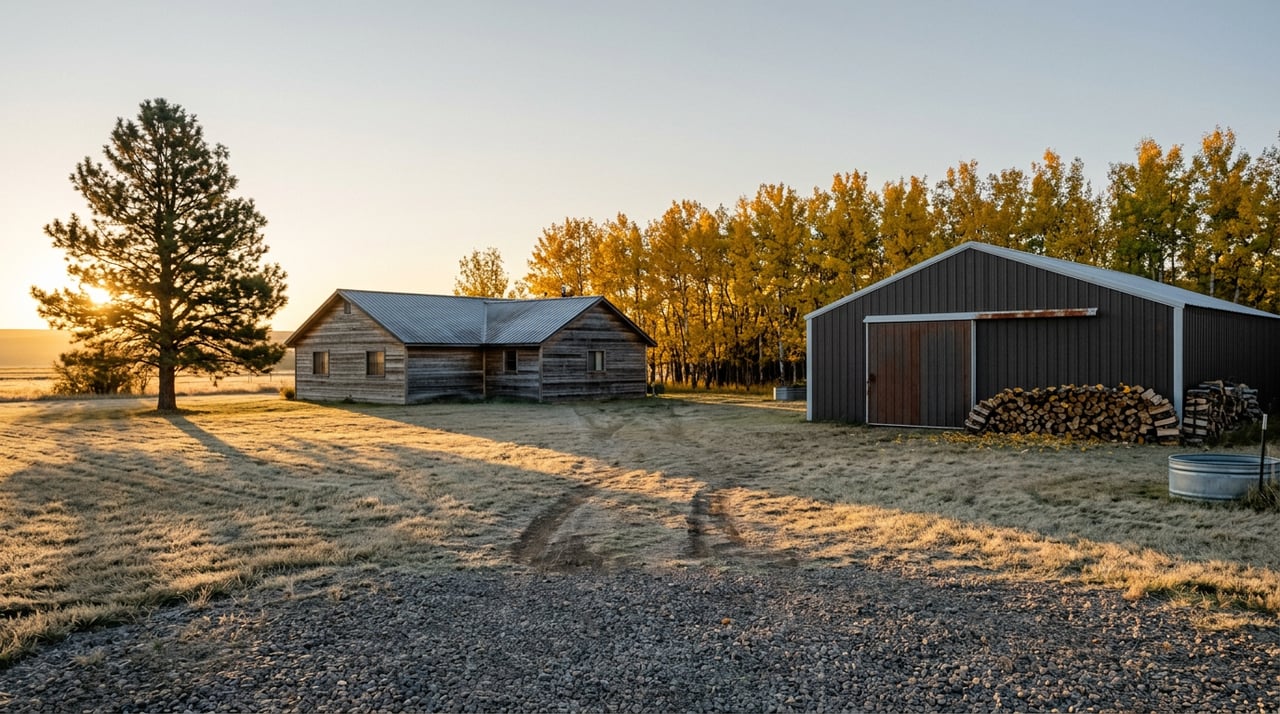
Right now, if you drive the 26 miles of gravel and two-track north from Jordan to Hell Creek, you'll pass more empty boat trailers than loaded ones. Archery season opened September 5. Black bear and wolf season opens September 15. But the season everyone in Garfield County actually plans around, the one that fills the cafe and empties the school on opening morning, doesn't start until October 24. That gap, six weeks and change, is where Jordan sits today. It's not the calm before hunting season. It's hunting season, just the quiet version most people driving through never notice.
That distinction matters if you live here, because the two versions of fall in this country run on completely different clocks, and the place that shows it best isn't downtown. It's a marina.
Hell Creek Marina Is Already Changing Jobs
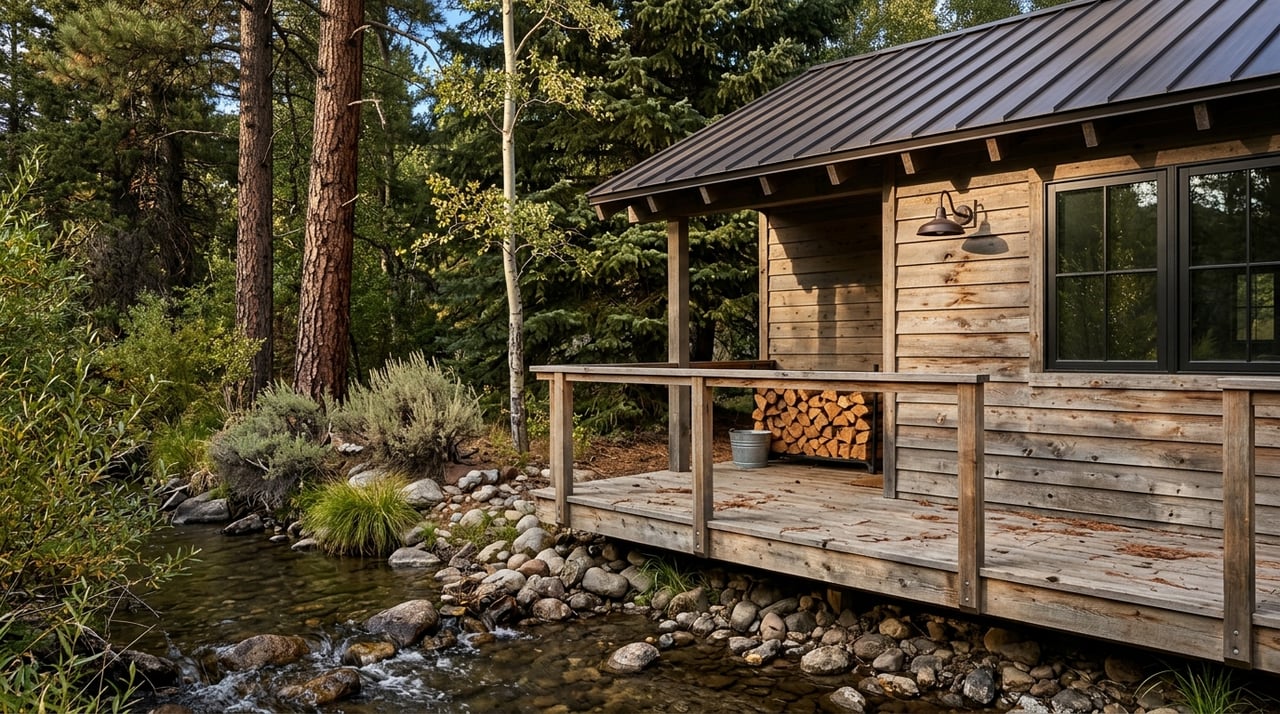
Hell Creek Marina sits at 2502 Hell Creek Road, on the Fort Peck Reservoir shoreline that the outfit's own listings describe as some of the best walleye, northern pike, smallmouth bass, and early lake trout water on the reservoir. All summer it runs like any lake marina: cabin rentals, dry dock storage, bait and ice, a gas dock. But the same facility that rented houseboats in July starts filling with hunters in September, long before rifle season opens, because archery hunters and the handful of early bear hunters need a base camp in the Missouri Breaks just as much as the elk hunters will in late October.
The marina doesn't wait for October to make the switch. It runs three different businesses inside one calendar year on the same dock, and right now, in this six-week window, it's running two of them at once. Anglers are still working the reservoir as the water starts to cool, which pushes walleye and pike into shallower water and actually improves the fishing through September and October. Archery hunters are already booking cabins for Missouri Breaks elk and mule deer. Neither crowd is big yet. The marina isn't full. But it isn't empty either, and that in-between state is exactly what a six-week gap between two hunting openers looks like on the ground.
If you're used to thinking of "hunting season" as a single event that starts sometime in the fall, Hell Creek Marina is proof that Garfield County actually runs two overlapping seasons with very different intensities, and the business built to serve hunters has organized itself around that fact for years.
The Same Badlands That Grow Fossils Grow Deer
There's a second overlap happening on the same ground, and it's easy to miss if you only think of Jordan in terms of cattle and wheat. The Hell Creek Formation, the exposed rock layer that gives this stretch of badlands its name, is one of the most studied dinosaur-bearing formations in the world, and it's named for exposures studied specifically on Hell Creek near Jordan. The Wankel T-Rex, now known as the Nation's T-Rex, was found on a ranch inside Garfield County. That's not a regional claim to fame borrowed from somewhere else on the Hi-Line. It happened here, on land that ranchers still work.
Clayton Phipps, the rancher known around the region as the Dinosaur Cowboy, has spent three decades working Hell Creek country for fossils, and one of his most significant finds, a rare pair of dinosaurs discovered together, came out of the Hell Creek Formation in neighboring Phillips County, about ten miles from his current dig site. The formation doesn't respect county lines any more than the deer do. It runs through the same badlands that, come October, turn into hunting ground for elk, mule deer, and antelope in the Missouri Breaks.
That's the part worth sitting with if you live in Jordan: the ground doing double duty isn't a coincidence of geography. The same erosion that exposes 65-million-year-old bone also carves the coulees and rims that hold game. Paleontologists read the badlands one way each summer. Hunters read the same badlands a different way each fall. Right now, in mid-September, both readings are technically in season, just at low volume, while the crowd that will actually fill the county is still six weeks out.
What The Six-Week Gap Actually Means This Month
Montana's 2026 season calendar backs up what the marina and the badlands are already showing. Archery big game season, covering elk, deer, black bear, wolves, and mountain lions for licensed archery hunters, opened Saturday, September 5. Black bear and wolf general season opens Tuesday, September 15, the same day general season opens for hunters holding special draw licenses for bighorn sheep, moose, and mountain goat. The youth deer season runs October 15 and 16. But the general firearms season for deer and elk, the one that brings out-of-state trucks and fills every motel room from Jordan to Circle, doesn't open until Saturday, October 24, and runs through November 29.
If you've lived here more than a season or two, none of those dates surprise you. What might is how long the gap actually runs. Six weeks is enough time for the marina to half-fill with archery hunters, for the lake fishing to genuinely peak as the water cools, and for the badlands to sit in a strange dual identity, fossil ground and hunting ground at once, before the county's population does its real autumn swing. If you're gauging how busy town feels right now against how busy it'll feel in five or six weeks, this is why the two don't match yet. The surge hasn't arrived. It's scheduled.
For anyone weighing when to expect the Missouri Breaks to get genuinely crowded with hunters, or wondering why Hell Creek still has open cabins in mid-September despite archery season being open, the answer is the same: the real rush is booked for late October, and everything happening right now is the quieter first act.
Reading The Rest Of The Year Off This Pattern
None of this is really about hunting logistics for their own sake. It's about how a small county's economy and rhythm move in layers that outsiders read as a single "season" but locals know as several distinct windows stacked on top of each other. Garfield County has roughly 1,173 residents spread across nearly 4,850 square miles, and a place that size doesn't have room for its calendar to be vague. The marina's own shift from lake outfitter to hunter base camp to winter ice-fishing operation isn't marketing copy. It's how a small business survives on a lake 26 miles from the nearest town by reading the same six weeks everyone else is living through and adjusting three different times a year.
That's the kind of detail that only shows up if you're paying attention to how this county actually runs, not how a hunting guide site describes it in general terms. The badlands aren't just scenic. They're doing double duty right now, this week, holding both the last of the season's fossil work and the first trickle of archery hunters, while the county waits for the calendar to catch up to what everyone already knows is coming in late October.
If you're weighing land, a ranch, or a home base in Garfield County and want someone who reads this country the way the marina does, one season at a time, Dayle Stahl works this ground directly. Reach out through Dayle Stahl for a conversation grounded in how Jordan and the surrounding Missouri Breaks actually move through the year, or ask about a free home valuation to see where your property stands as the county heads into its busiest stretch.